
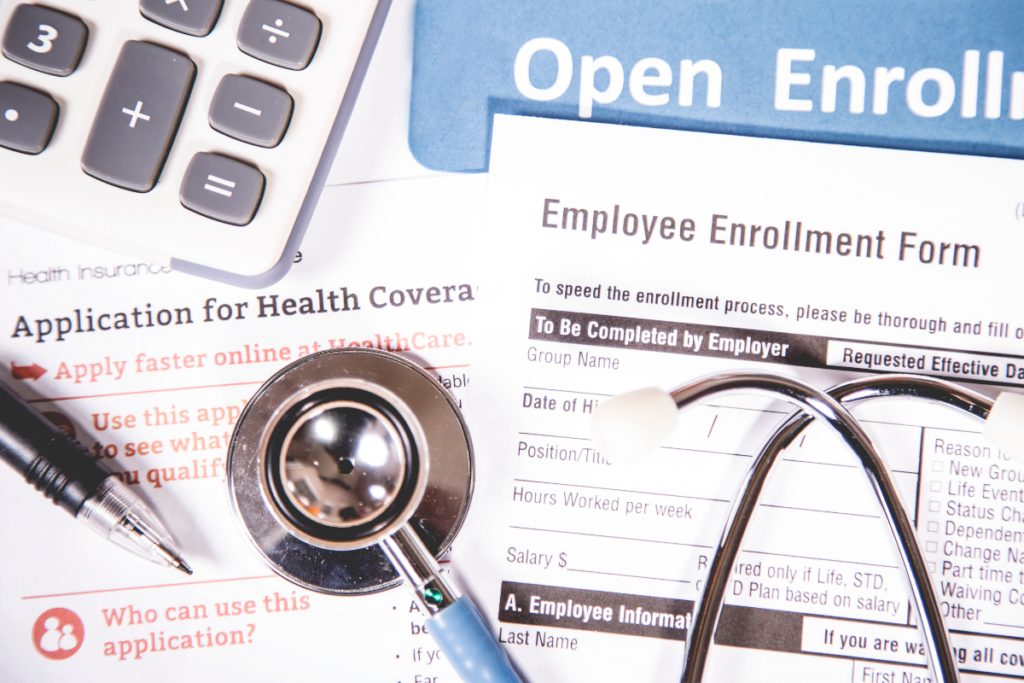
With the 2026 open enrollment season around the corner, employers have an opportunity to develop attractive benefits offerings and understand the compliance changes affecting the design and administration of their health plans. The following resources outline how employers can thoughtfully kick off open enrollment efforts and prepare for potential compliance responsibilities for the open enrollment season.
- Benefits Insights: Early Prep is Crucial for 2026 Open Enrollment
- Benefits Insights: Maximize Your 2026 Open Enrollment Communications
- Benefits Insights: 5 Challenges to Tackle for 2026 Open Enrollment
- Benefits Insights: Reimagining Open Enrollment With AI
- Compliance: 2026 Open Enrollment Checklist
- Compliance: Avoiding Common Open Enrollment Compliance Mistakes
- 2026 Open Enrollment: Benefit Notices
- 2026 Open Enrollment: Health Savings Accounts
- Employee Communications for 2026 Open Enrollment
Early Preparation is Crucial for 2026 Open Enrollment
By starting open enrollment efforts early, employers have enough time to inform and educate workers about their benefits and what the health plan options actually mean. The Benefits Insights article below includes helpful steps on how to offer competitive benefits that meet workforce needs, craft employee messaging, and effectively communicate benefits offerings.
Benefits offerings are one of the top reasons employees join companies and stay at their jobs, so employers should ask them which perks are most valuable. Here are some of today’s most popular benefits:
- High-quality, affordable health care coverage
- Remote or hybrid work environments
- Flexible or hybrid scheduling (e.g., four-day workweeks)
- Paid leave policies
- Mental health resources
- Family-building and reproductive health benefits
- Caregiving benefits
- Professional development opportunities
- Financial wellness resources
After solidifying benefits options, employers need to plan their communication strategies. Key messaging might focus on new or updated benefits offerings, which can incentivize employees to stay in their current positions.
Employees want more help understanding their options, so employers should share information early, provide educational resources and have multiple communication channels, such as:
- Group meetings to discuss available benefits
- One-on-one meetings to go over any questions
- Multichannel communication methods (e.g., videos, printouts, guides, presentations, emails and comprehensive guides)
- Periodic enrollment reminders, including enrollment dates and workplace-specific instructions
- Messaging that directs employees to designated points of contact for questions (e.g., HR)
With ample time to tailor their benefits offerings and thoughtfully showcase all employee perks, employers can educate their current workforce, boost retention efforts, and win more talent in the ever-challenging labor market.
Maximize Your 2026 Open Enrollment Communications
Communication matters because it enables employees to understand the open enrollment process in a clear and assessable manner, which can boost active participation in benefits selection. Employees who feel valued and informed about their benefits are more likely to appreciate their employer’s efforts and stay engaged with their work.
- Review previous open enrollment communications to identify what worked and what didn’t. This information can be used to improve the current communication strategy.
- Develop key messaging that is focused on new or updated benefits offerings, and developing FAQs to address common concerns quickly.
- Customize communication to the needs of different employee segments, including various age groups, life stages, and demographics within the workforce.
- Gather necessary resources—such as printed materials, digital platforms and support staff.
- Vary communication channels such as email, printed materials, webinars, and in-person meetings to reach employees effectively.
- Prioritize clear and concise messaging to help make benefits simple and easier to understand.
- Make communication digestible to catch employees’ attention and make it easy for employees to know what to focus on and take action (i.e. delivering bite-sized information to employees through videos and emails).
- Use real-world examples to add context so that employees can relate to real-life stories/scenarios of when or why they might need certain benefits.
- Personalize communications (address employees by name and highlight benefits relevant to their individual circumstances, for example) to engage employees with open enrollment information and yield better results.
- Remain available for employees to ask questions and get clarifications through webinars, meetings, dedicated question-and-answer sessions, or HR open office hours.
- Follow up with continued employee communications to remind them of their choices, deadlines, and important events or changes to benefits.
- Collect feedback from employees (using surveys or focus groups) about the OE process to understand what worked well and where improvements can be made.
- Evaluate and optimize the outcomes of open enrollment communication efforts. Check if goals were achieved and use the data to refine next year’s strategy.
- Provide ongoing education of the benefits and resources available to employees.
OE communication is a crucial aspect of benefits administration that directly impacts employees’ well-being and satisfaction. By planning, customizing communications, and continually improving their approach, employers can make the most out of their 2026 open enrollment period.
5 Challenges to Tackle for 2026 Open Enrollment
Open enrollment is no longer just a logistical exercise; it’s a strategic moment to reinforce trust, boost engagement, and align benefits with the changing needs of today’s workforce. The article below explores five common open enrollment challenges and how employers could approach them.
- Adapt to a more dynamic landscape and rethink traditional offerings
- Expand to a wide range of voluntary benefits
- Offer tax-advantaged savings accounts (such as HSAs and FSAs)
- Embrace flexibility and personality
- Simplified benefit communications with plain language and visual guides.
- Mobile-friendly enrollment platforms and multilingual support.
- Personalized reminders via email or text.
- Interactive tools like countdowns or progress trackers.
- Culture of accountability creation by encouraging managers to check in with their teams.
- Education and outreach, such as hosting virtual benefit fairs, offering live Q&A sessions, and giving employees helpful informational resources.
Reimagining Open Enrollment With AI
- Information Overload: Employees receive dense packets of benefits information, often filled with jargon, making open enrolment information difficult to decipher and make an informed decision about.
- Unfamiliarity with Enrollment Technology: Employees often struggle to navigate their open enrollment platforms and get sidetracked by technology that is easy to use.
- Low Engagement: Employees make default choices, simply choose last year’s selections, or skip reviewing options due to confusion or time constraints.
- Heavy Workload: Employers, HR teams, and other professionals facilitating the open enrollment process spend countless hours answering repetitive questions and troubleshooting enrollment issues.
- Personalized Guidance Through AI Chatbots: AI-powered chatbots (e.g., ChatGPT and Microsoft Copilot) can provide real-time, personalized support to employees AND can be trained on company-specific benefits data and information, ensuring more accurate and relevant responses.
- Data-Driven Recommendations: AI can analyze employee demographics, past choices, and usage patterns to suggest optimal benefits packages. This level of personalization not only improves decision-making but also boosts benefits utilization and organizations’ return on investment.
- Automated Communication Campaigns: AI tools can automate and optimize communication strategies by sending personalized email or text reminders, educational content, suggestions based on employee behavior, and targeted help to keep employees moving through the process.
- Reduced Administrative Burden: AI tools can automate repetitive tasks (such as form validation, deadline tracking, and FAQ responses) so employers are free to focus on strategic initiatives and ensure smoother operations. AI can also flag missing information or errors before submission, improving compliance and reducing costly mistakes.
- Enhanced Employee Experience: Organizations can provide 24/7 access to AI tools that guide employees through the enrollment process, empowering employees to make informed decisions at their own pace to increase overall engagement and satisfaction.
Open enrollment doesn’t have to be a stressful, confusing experience. With AI, employers can turn it into a strategic opportunity to engage employees, optimize benefits usage and streamline operations. By embracing these technologies, organizations not only modernize their open enrollment practices but also demonstrate a commitment to employee well-being and innovation. In turn, employees may understand their benefits selections more fully and make better-informed health decisions throughout the year.
Compliance: 2026 Open Enrollment Checklist
To prepare for open enrollment, employers should be aware of the legal changes affecting the design and administration of their health plans for plan years beginning on or after January 1, 2026. The Compliance article below includes an open enrollment checklist for the 2026 plan year. We also have a presentation that walks employers through their potential compliance responsibilities for the open enrollment season.
Employers should review their health plan’s design to confirm that it has been updated (as necessary) for any changes, and take the following steps for the 2026 plan year:
- ACA Affordability Standard for ALEs: Confirm that at least one of the health plans offered to full-time employees satisfies the ACA’s affordability standard (9.96%).
- Out-of-Pocket Maximum: Review the health plan’s OOPMs to ensure they comply with the ACA’s limits for the 2026 plan year.
- Determine if the health plan’s OOPM for family coverage is greater than the ACA’s OOPM for self-only coverage ($10,600 for 2026 plan years). If it is greater, make sure the health plan embeds an individual OOPM for family coverage that is not more than $10,600.
- If the health plan is an HDHP, confirm that it complies with the lower limits on OOPMs. For the 2026 plan year, the OOPMs for HDHPs are $8,500 for self-only coverage and $17,000 for family coverage.
- Preventive Care Benefits: Confirm the health plan covers the latest recommended preventive care services without imposing any cost sharing when the care is provided by in-network providers.
- Health FSA Contributions: Once the IRS releases the 2026 health FSA limit, confirm that employees will not be allowed to make pre-tax contributions in excess of the limit for the 2026 plan year. Communicate the health FSA limit to employees as part of the open enrollment process.
- HDHP and HSA Limits: Check whether HDHP cost-sharing limits need to be adjusted for the 2026 limits. Communicate HSA contribution limits for 2026 to employees as part of the enrollment process.
- Permanent Extension of HDHP Telehealth Option: Determine whether the HDHPs will waive the deductible for telehealth services for the plan year beginning in 2026. Notify plan participants of any cost-sharing changes for telehealth services through an updated SPD or SMM.
- EBHRA Limit: Decide how much will be contributed to the Excepted Benefit Health Reimbursement Arrangement (EBHRA) for eligible employees for the 2026 plan year, up to a maximum of $2,200. Communicate the EHBRA’s annual benefit amount to employees as part of the open enrollment process.
- Wellness Programs Surcharges/Rewards: Decide whether to impose a surcharge (or provide a reward) based on any health-related standard.
- If a surcharge is imposed (or a reward offered), ensure it is provided through a wellness program that satisfies HIPAA’s nondiscrimination requirements, including explaining to participants that a reasonable alternative standard is available for avoiding the surcharge (or qualifying for the reward).
- Mental Health Parity—Required Comparative Analysis for NQTLs: Reach out to the health plan’s issuer or third-party administrator (TPA) to confirm that comparative analyses of NQTLs will be updated, if necessary, for the plan year beginning in 2026.
- Open Enrollment Notices: Confirm that their open enrollment materials contain certain required participant notices (such as SBC, Annual CHIP Notice, Medicare Part D Notice, WHCRA Notice, Wellness Program Notices) or should consider including these notices in their open enrollment materials to minimize costs and streamline administration.
Remember, any changes to a health plan’s benefits for the 2026 plan year should be communicated to plan participants through an updated Summary Plan Description (SPD) or a Summary of Material Modifications (SMM).
Avoiding Common Open Enrollment Compliance Mistakes
Employers commonly make several mistakes during open enrollment, a busy and stressful period that comes with a high potential for errors. The Compliance article below explains five common compliance mistakes employers should avoid making at open enrollment time.
Employers frequently change their employee benefit offerings ahead of open enrollment to stay competitive and increase employee satisfaction.
Employers that sponsor health plans should provide certain benefit notices in connection with their plans’ open enrollment periods.
- SBC
- SPD
- Children’s Health Insurance Program (CHIP) Notice
- Initial COBRA Notice
- WHCRA Notice
- Medicare Part D Notice
- Grandfathered Plan Notice
- Notice of Patient Protections
- Health Insurance Portability and Accountability Act (HIPAA) Privacy Notice
- HIPAA Special Enrollment
Employers should ensure that open enrollment materials are provided to all individuals who are eligible to make benefit elections including:
- Active employees
- Employees on leave or furlough who are benefits-eligible
- COBRA qualified beneficiaries
Eligible individuals should receive information on available benefits and costs, procedures for making elections, and election deadlines. Employers can deliver open enrollment materials in a variety of ways, including delivery by hand in the workplace, mailing to a last-known address, emailing or posting to an internal company website. As a best practice, employers should implement a multichannel communication strategy to effectively distribute open enrollment information.
Open enrollment periods should end well before the upcoming plan year. This gives an employer time to take care of administrative tasks, including confirming elections, processing enrollments and performing preliminary nondiscrimination testing, if applicable, before the upcoming plan year starts.
Despite an employer’s best efforts to ensure a successful open enrollment, employees may still miss the enrollment deadline or mistakenly select the wrong benefits. To minimize the need for post-open enrollment corrections, employers should encourage employees to enroll early and provide clear communication of election processes and deadlines.
Health plans that impose a surcharge (or provide a reward) based on a health-related standard (e.g., not using tobacco or meeting a specific exercise target) must comply with HIPAA’s nondiscrimination requirements for wellness programs. Among other HIPAA requirements, these health-contingent wellness programs must provide a reasonable alternative standard for qualifying for the full reward (or avoiding the surcharge) for anyone who does not meet the initial health-related standard.
The availability of a reasonable alternative standard must be disclosed in all plan materials describing the surcharge or reward. This disclosure must also be included in any notice that an individual did not satisfy the wellness program’s initial health-related standard. The disclosure must include contact information for obtaining the alternative standard and a statement that recommendations of an individual’s personal physician will be accommodated.
Employers that offer health-contingent wellness programs should ensure they comply with HIPAA’s nondiscrimination requirements, including explaining to participants that a reasonable alternative standard is available for avoiding the surcharge (or qualifying for the reward).
2026 Open Enrollment: Benefit Notices
Employers that sponsor group health plans should provide certain benefit notices in connection with their plans’ open enrollment periods. The Compliance article below includes a chart that summarizes the benefit notices that employers should provide in connection with their 2026 open enrollment periods.
Employers should provide certain benefit notices to their employees at open enrollment time. Some benefit notices apply to all group health plans, while other benefit notices only apply to certain group health plans, based on plan design and coverage.
- Summary of Benefits and Coverage (SBC)
- Medicare Part D Notice
- Women’s Health and Cancer Rights Act (WHCRA) Notice
- Annual Children’s Health Insurance Program (CHIP) Notice
- SPD (and SMM, if applicable)
- COBRA General Notice
- Grandfathered Plan Notice
- Notice of Patient Protections
- HIPAA Privacy Notice
- HIPAA Special Enrollment Notice
- Summary Annual Report (SAR)
- HIPAA Wellness Program Notice
- Americans with Disabilities Act (ADA) Wellness Notice
- Individual Coverage HRA (ICHRA) Notice
2026 Open Enrollment: Health Savings Accounts
Employers that sponsor HSA-compatible HDHPs should prepare for open enrollment by ensuring that employees understand how HSAs work, updating their HDHP’s design, and communicating any plan changes to employees. The Compliance article below summarizes these steps.
Employers can help their employees make informed decisions at open enrollment time by explaining:
- Key HSA Advantages: Selecting an HDHP/HSA coverage option include the following advantages: lower premiums, powerful tax savings, employee ownership, rollover savings opportunity, ease of use, and open at any time.
- HSA Eligibility: To be eligible for an HSA, an employee must be covered by an HDHP; not be covered by other health coverage that is not an HDHP, including coverage under a traditional health flexible spending account (FSA) or health reimbursement arrangement (HRA), with certain limited exceptions; not be enrolled in Medicare; and not be eligible to be claimed as a dependent on another person’s tax return.
- HSA Contribution Limits: Effective January 1, 2026, the annual HSA contribution limits are $4,400 for individuals with self-only HDHP coverage; and $8,750 for individuals with family HDHP coverage.
Parrott Benefit Group can provide sample resources for communicating the HSA rules to employees.
To prepare for open enrollment, employers should update their HDHPs’ designs to ensure they comply with the IRS’ adjusted cost-sharing limits for 2026 and should be aware that the pre-deductible coverage option for telehealth services has been permanently extended.
- Cost-sharing Limits: The HDHP Minimum Deductibles for 2026 are 1,700 for Self-only and $3,400 for Family. The HDHP Maximum Out-of-Pocket Expense Limits (deductibles, copayments and other amounts, but not premiums) for 2026 are $8,500 for Self-only and $17,000 for Family.
- Permanent Design Option for Telehealth Services: Employers with HDHPs should determine whether the HDHP will waive the deductible for telehealth services for the plan year beginning in 2026; and notify plan participants of any cost-sharing changes for telehealth services through an updated SPD or SMM.
Employee Communications for 2026 Open Enrollment
The choices employees make during their open enrollment period can have a lasting impact on both their health and overall well-being. However, navigating the array of plans, yearly changes, terminology, and cost structures can be challenging. Our toolkit below provides a list of supportive resources that employers can use to proactively communicate with employees about preparing for open enrollment and navigating their benefit options.
Are you ready for open enrollment? Start planning now! Contact us for additional open enrollment support or employee benefits resources— including enrollment guides, videos, and presentations.
These resources are not intended to be exhaustive nor should any discussion or opinions be construed as legal or professional advice. Readers should contact legal counsel for legal advice. These resources are to be used for informational purposes only and are not intended to replace the advice of an insurance professional. ©2025 Zywave, Inc. All rights reserved.