
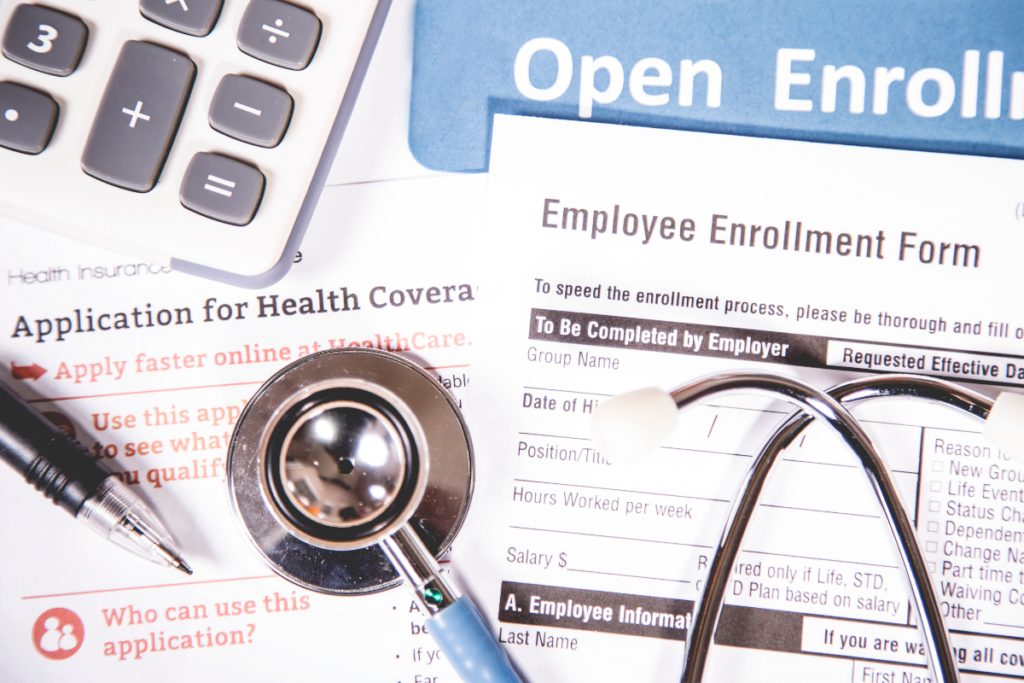
During the 2027 open enrollment season, employers have an opportunity to develop attractive benefits offerings and proactively communicate with employees to help them understand what’s available. The following resources outline how employers can thoughtfully kick off open enrollment efforts.
- Benefits Insights: Early Preparation Is Crucial for 2027 Open Enrollment
- Cheat Sheet: What’s New for 2027 Open Enrollment
- Compliance: 2027 Open Enrollment Checklist
- Benefits Insights: Maximize Your 2027 Open Enrollment Communications
- Benefits Insights: 8 Tips for Effective 2027 Open Enrollment Communication
- Compliance: Open Enrollment 2027 – Benefit Notices
- Compliance: Open Enrollment 2027 – Health Savings Accounts
- Benefits Insights: 5 Challenges to Tackle for 2027 Open Enrollment
- Benefits Insights: 2027 Open Enrollment Trends to Monitor
- Infographic: The Ideal Open Enrollment Timeline
- Benefits Insights: Last-Minute Open Enrollment Planning
Early Preparation Is Crucial for 2027 Open Enrollment
By starting open enrollment efforts early, employers will have ample time to tailor their benefits offerings and thoughtfully showcase all employee perks. The Benefits Insights article below includes helpful steps on how to offer competitive benefits that meet workforce needs, craft employee messaging, and effectively communicate benefits offerings.
Benefits offerings are one of the top reasons employees join companies and stay at their jobs, so employers should ask them which perks are most valuable. Here are some of today’s most popular benefits:
- High-quality, affordable healthcare coverage
- Remote or hybrid work environments
- Flexible or hybrid scheduling (e.g., four-day workweeks)
- Paid leave policies
- Retirement savings plans
- Mental health resources
- Family-building and reproductive health benefits
- Caregiving benefits
- Professional development opportunities
- Financial wellness resources
After solidifying benefits options, employers need to plan their communication strategies. Key messaging might focus on new or updated benefits offerings, which can incentivize employees to stay in their current positions.
Employees want more help understanding their options, so employers should share information early, provide educational resources and have multiple communication channels, such as:
- Group meetings to discuss available benefits
- One-on-one meetings/discussions to go over any questions
- Multichannel communication methods (e.g., videos, printouts, presentations, emails, and comprehensive guides)
- Periodic enrollment reminders, including enrollment dates and workplace-specific instructions
- Messaging that directs employees to designated points of contact for questions (e.g., HR)
Employers will have ample time to tailor their benefits offerings and thoughtfully showcase all employee perks by starting open enrollment efforts early. This can help employers educate their current workforce, boost retention efforts and win more talent in the ever-challenging labor market.
What’s New for 2027 Open Enrollment Cheat Sheet
The following cheat sheet outlines key figures to have on hand for the 2027 plan year:
- HSA/HDHP Limits
- ACA Cost-Sharing
- ACA Affordability
- Dependent Care FSA
- Excepted Benefit HRA
2027 Open Enrollment Checklist
To prepare for open enrollment, employers should be aware of the legal changes affecting the design and administration of their health plans for plan years beginning on or after Jan. 1, 2027. The following Compliance Overview includes an open enrollment checklist for the 2027 plan year. We also have a presentation that walks employers through their potential compliance responsibilities for the open enrollment season.
Employers should review their health plan’s design to confirm that it has been updated, as necessary, for these changes.
- ACA Affordability Standard: Review the IRS’ affordability safe harbors and select the most appropriate option(s), considering each safe harbor’s level of predictability and ability to maximize employee contributions; and confirm that at least one of the health plans offered to full-time employees satisfies the ACA’s affordability standard using one or more of the safe harbors.
- Out-of-Pocket Maximum (OOPM): Review the health plan’s OOPMs to ensure they comply with the ACA’s limits for the 2027 plan year; determine if the health plan’s OOPM for family coverage is greater than the ACA’s OOPM for self-only coverage ($12,000 for 2027 plan years). If it is greater, make sure the health plan embeds an individual OOPM for family coverage that is not more than $12,000; and confirm that the health plan complies with the lower limits on OOPMs if it is an HDHP. For the 2027 plan year, the OOPMs for HDHPs are $8,700 for self-only coverage and $17,400 for family coverage.
- Preventive Care Benefits: Confirm the health plan covers the latest recommended preventive care services without imposing any cost sharing when the care is provided by in-network providers.
- HDHP and HSA Limits: Check whether HDHP cost-sharing limits need to be adjusted for the 2027 limits; and communicate HSA contribution limits for 2027 to employees as part of the enrollment process.
- Health FSA Contributions: Monitor future developments for the release of the health FSA limit for 2027; confirm that employees will not be allowed to make pre-tax contributions in excess of the limit for the 2027 plan year (once the IRS releases the health FSA limit); and communicate the health FSA limit to employees as part of the open enrollment process.
- EBHRA Limit: Decide how much will be contributed to the EBHRA for eligible employees for the 2027 plan year, up to a maximum of $2,250; and communicate the EBHRA’s annual benefit amount to employees as part of the open enrollment process.
- Wellness Programs – Surcharges/Rewards: Decide whether to impose a surcharge (or provide a reward) based on any health-related standard; and ensure that any such surcharge or reward is provided through a wellness program that satisfies HIPAA’s nondiscrimination requirements, including explaining to participants that a reasonable alternative standard is available for avoiding the surcharge (or qualifying for the reward).
- Mental Health Parity – Required Comparative Analysis for NQTLs: Reach out to the health plan’s issuer or third-party administrator (TPA) to confirm that comparative analyses of NQTLs will be updated, if necessary, for the plan year beginning in 2027.
- Consider Expanded Options for Fertility Benefits: Contact their issuers or TPAs, as applicable, to understand available options for adding (or expanding) fertility coverage under their current group health plan and to determine what limitations or parameters should apply to the coverage; explore standalone coverage options for fertility benefits, such as through an HRA or health FSA, or as an excepted benefit; and stay current on federal developments regarding proposed expansions of fertility benefit coverage options.
Health plan sponsors should confirm that their open enrollment materials contain certain required participant notices, such as the summary of benefits and coverage (SBC), when applicable. Some participant notices must also be provided annually or upon initial enrollment. Employers should consider including these notices in their open enrollment materials to minimize costs and streamline administration.
- SBCs: The ACA requires health plans and health insurance issuers to provide an SBC to applicants and enrollees each year at open enrollment or renewal time.
- Medicare Part D Notices: Employers that provide prescription drug coverage to individuals who are eligible for Medicare Part D must inform these individuals whether their prescription drug coverage is creditable, meaning that the employer’s prescription drug coverage is at least as good as Medicare Part D coverage.
- Annual CHIP Notices: Health plans covering residents in a state that provides a premium subsidy to low-income children and their families to help pay for employer-sponsored coverage must send an annual Children’s Health Insurance Program (CHIP) notice about the available assistance to all employees residing in that state.
- Initial COBRA Notices: The Consolidated Omnibus Budget Reconciliation Act (COBRA) applies to health plans sponsored by employers with 20 or more employees. Health plan administrators must provide an initial COBRA notice to new participants and certain dependents within 90 days after plan coverage begins.
- SPDs: Any changes to a health plan’s benefits for the 2027 plan year should be communicated to plan participants through an updated summary plan description (SPD) or a summary of material modifications (SMM).
- Notices of Patient Protections: If a health plan requires participants to designate a participating primary care provider, the plan or issuer must provide a notice of these patient protections whenever the SPD or similar description of benefits is provided to a participant.
- Grandfathered Plan Notices: If an employer has a grandfathered plan, it should include information about the plan’s grandfathered status in plan materials describing the coverage under the plan, such as SPDs and open enrollment materials.
- Notices of HIPAA Special Enrollment Rights: Self-insured health plans must maintain and provide their own Privacy Notices.
- WHCRA Notices: Health plans and issuers must provide a notice of participants’ rights to mastectomy-related benefits under the WHCRA at the time of enrollment and on an annual basis.
- SARs: Plan administrators required to file Form 5500 must provide participants with a narrative summary of the information in Form 5500, called a summary annual report (SAR).
- Wellness Program Notices: Health plans that include wellness programs may be required to provide certain notices regarding the program’s design. HIPAA Wellness Program Notice and Americans with Disabilities Act (ADA) Wellness Program Notice.
- ICHRA Notices: Employers with ICHRAs must provide a notice to eligible participants about the ICHRA and its interaction with the ACA’s premium tax credit.
- Revenue Procedure 2026-24, which includes the inflation-adjusted limits for HSAs and HDHPs for 2027
- Model notices for group health plans, including the WHCRA notice
- Model COBRA notices for group health plans
Maximize Your 2027 Open Enrollment Communications
As organizations continue to adapt to evolving workforce needs and changing regulations in 2027, open enrollment communication becomes more critical than ever. The following Benefits Insights article highlights why open enrollment communication matters and provides tips on what to do before, during and after enrollment to maximize its effectiveness.
Communication matters because it enables employees to understand the open enrollment process in a clear and accessible manner, which can boost active participation in benefits selection. Employees who feel valued and informed about their benefits are more likely to appreciate their employer’s efforts and stay engaged with their work.
- Review previous open enrollment communications to identify what worked and what didn’t. This information can be used to improve the current communication strategy.
- Develop key messaging that is focused on new or updated benefits offerings, and developing FAQs to address common concerns quickly.
- Customize communication to the needs of different employee segments, including various age groups, life stages, and demographics within the workforce.
- Gather necessary resources—such as printed materials, digital platforms and support staff.
- Vary communication channels such as email, printed materials, webinars, and in-person meetings to reach employees effectively.
- Prioritize clear and concise messaging to help make benefits simple and easier to understand.
- Make communication digestible to catch employees’ attention and make it easy for employees to know what to focus on and take action (i.e. delivering bite-sized information to employees through videos and emails).
- Use real-world examples to add context so that employees can relate to real-life stories/scenarios of when or why they might need certain benefits.
- Personalize communications (address employees by name and highlight benefits relevant to their individual circumstances, for example) to engage employees with open enrollment information and yield better results.
- Remain available for employees to ask questions and get clarifications through webinars, meetings, dedicated question-and-answer sessions, or HR open office hours.
- Follow up with continued employee communications to remind them of their choices, deadlines, and important events or changes to benefits.
- Collect feedback from employees (using surveys or focus groups) about the OE process to understand what worked well and where improvements can be made.
- Evaluate and optimize the outcomes of open enrollment communication efforts. Check if goals were achieved and use the data to refine next year’s strategy.
- Provide ongoing education of the benefits and resources available to employees.
Open enrollment communication is a crucial aspect of benefits administration that directly impacts employees’ well-being and satisfaction. By planning, customizing communications and continually improving their approach, employers can make the most out of their 2027 open enrollment period. Effective communication helps employees make informed choices and strengthens their connection with the organization, leading to a happier and more engaged workforce.
8 Tips for Effective 2027 Open Enrollment Communication
Many employees are looking to their employers for guidance on navigating their available benefits and stretching their dollars further. As the 2027 open enrollment season approaches, employers are poised to provide their employees with resources they can use to better understand and act with more confidence when making benefits decisions. The following Benefits Insights article highlights eight communication tips for employers.
- Start early.
- Develop key messaging.
- Select a mix of appropriate channels.
- Keep it simple.
- Make it digestible.
- Use real-world examples.
- Avoid jargon.
- Personalize communication.
Educating and informing employees about their benefits options is an important part of open enrollment. Effective employee communication is an ongoing process, but it comes down to helping employees feel well-informed about their benefits options and confident about their choices.
Open Enrollment 2027 - Benefit Notices
Employers that sponsor group health plans should provide certain benefit notices in connection with their plans’ open enrollment periods. The following Compliance Overview includes a chart that summarizes the benefit notices that employers should provide in connection with their 2027 open enrollment periods.
- Medicare Part D Notice
- SBC
- HIPAA Privacy Notice
- WHCRA Notice
- CHIP Notice
- SPD (and SMM, if applicable)
- Notice of Patient Protections
- Wellness Program Notices
- ICHRA Notice
Open Enrollment 2027 - Health Savings Accounts
Employers that sponsor HSA-compatible HDHPs should prepare for open enrollment by ensuring that employees understand how HSAs work and updating their HDHP’s design and communicating any plan changes to employees. The following Compliance Overview summarizes these steps.
Employers with HSA-compatible HDHPs should help their employees make informed decisions at open enrollment time by explaining the:
- Key advantages of HSAs, including their powerful tax savings;
- Eligibility rules for making HSA contributions; and
- HSA contribution limits for 2027.
To prepare for open enrollment, employers with HDHPs should:
- Review their plan’s deductible and out-of-pocket limits to ensure they comply with the IRS’ limits for 2027;
- Decide whether the plan will pay benefits for telehealth before the annual minimum deductible has been met; and
- Communicate any plan changes to employees.
- IRS Publication 969, “Health Savings Accounts and Other Tax-favored Health Plans”
- IRS Revenue Procedure 2026-24, which includes the inflation-adjusted HSA limits for 2027
5 Challenges to Tackle for 2027 Open Enrollment
Open enrollment is no longer just a logistical exercise; it’s a strategic moment to reinforce trust, boost engagement and align benefits with the changing needs of today’s workforce. The following Benefits Insights article explores five common open enrollment challenges and how employers could approach them.
- Adapt to a more dynamic landscape and rethink traditional offerings
- Expand to a wide range of voluntary benefits
- Offer tax-advantaged savings accounts (such as HSAs and FSAs)
- Embrace flexibility and personality
- Simplified benefit communications with plain language and visual guides.
- Mobile-friendly enrollment platforms and multilingual support.
- Personalized reminders via email or text.
- Interactive tools like countdowns or progress trackers.
- Culture of accountability creation by encouraging managers to check in with their teams.
- Education and outreach, such as hosting virtual benefit fairs, offering live Q&A sessions, and giving employees helpful informational resources.
While open enrollment can present challenges for employers, these hurdles also offer an opportunity to strengthen organizational processes. With the right approach, open enrollment can shift from a seasonal stressor to a catalyst for long-term business success.
2027 Open Enrollment Trends to Monitor
Open enrollment continues to evolve and can no longer be treated as a routine administrative task that repeats the same plan design each year. The following Benefits Insights article explores five trends shaping open enrollment in 2027.
Employers are being asked by their workforce to offer a defined position on GLP-1 coverage. That starts with deciding whether to cover these drugs for diabetes only or extend coverage to weight management as well. From there, employers must determine whether to add utilization management (such as prior authorization or step therapy) and whether to pair coverage with a formalized wellness program. Regardless of coverage decisions, it needs to be an intentional, data-backed choice, not something left to chance at renewal.
Employers who treat this open enrollment season as a chance to reassess their whole strategy rather than just rolling over last year’s plan design will be better positioned to control costs while still meeting employees where they are. The employers coming out ahead in this cycle will be those who understand what’s driving employee expectations and where the market is heading.
Last-Minute Open Enrollment Planning
Employers who begin serious planning just months or weeks before open enrollment can still make meaningful, well-considered decisions. The following Benefits Insights article highlights what a compressed timeline still allows, the priorities to tackle first and what can wait.
- Submit carrier and plan changes without delay.
- Confirm your enrollment materials are accurate and compliant.
- Use existing data rather than commissioning a new analysis.
- Confirm that the enrollment platform and payroll integration are ready.
- Set a realistic enrollment window.
- Structural cost-sharing changes
- New vendor requests for proposals
- New voluntary benefit offerings
- Major system switches
- New carrier data feeds
- Section 125 and wrap document updates
- Dependent eligibility audits
- Wellness program redesigns
Employers who move quickly on fixed compliance deadlines, lean on existing data rather than starting from scratch and defer larger structural decisions to the next planning cycle can still deliver a sound open enrollment experience, even when the calendar did not go according to plan.
This article is not intended to be exhaustive nor should any discussion or opinions be construed as professional or legal advice. Readers should contact legal counsel for legal advice. © 2026 Zywave, Inc. All rights reserved.